For commercial energy-code compliance in the US, teams usually face a practical choice: document the building with COMcheck, or demonstrate compliance with a whole-building energy model. Both are legitimate — they just suit different projects. Choosing the wrong one can cost time, flexibility, or a failed plan review.
What COMcheck does
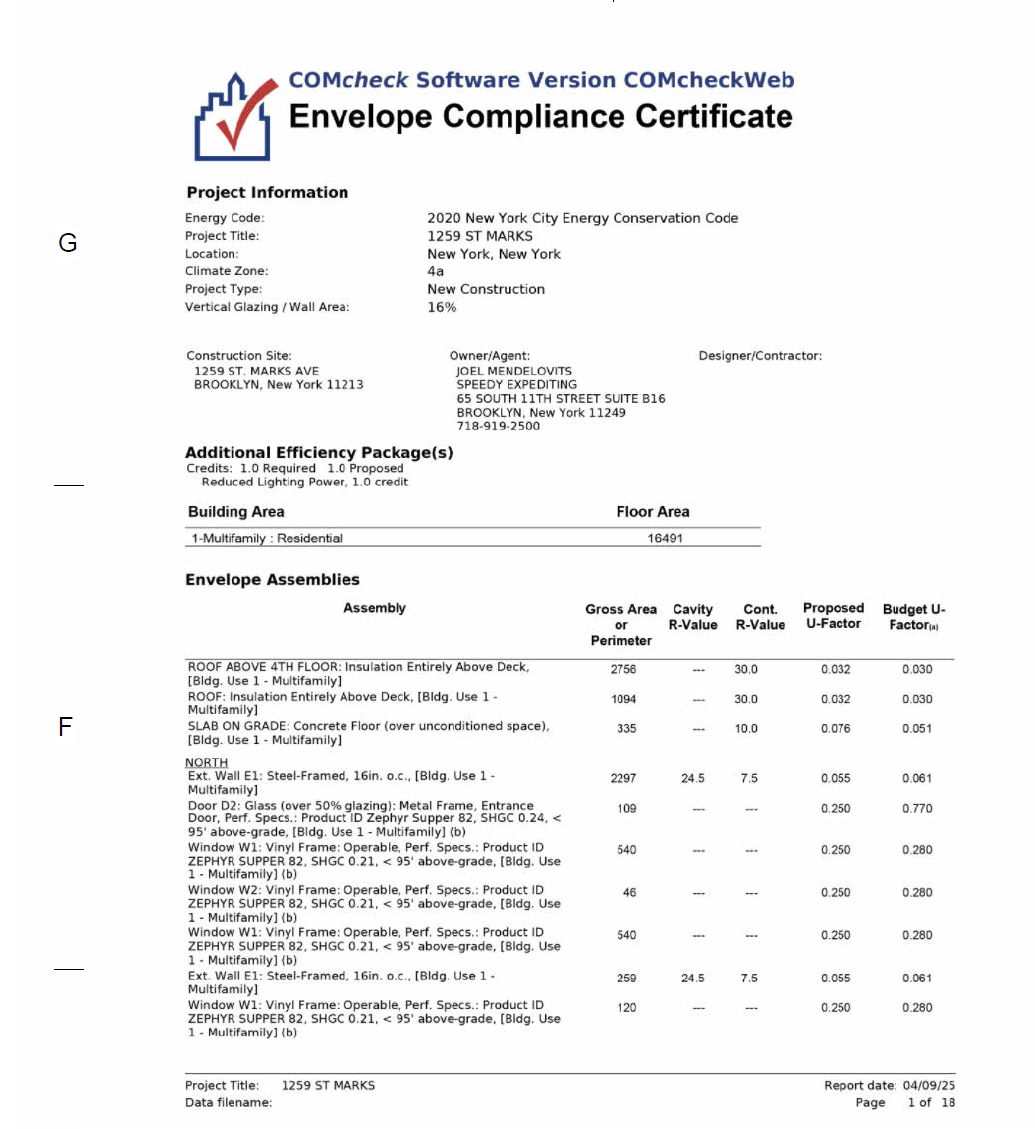
COMcheck is a free U.S. Department of Energy tool for showing compliance with commercial energy codes (IECC and ASHRAE 90.1). It checks the building's envelope, interior/exterior lighting and mechanical systems against the code's prescriptive requirements, with limited component trade-offs. It is not an annual energy simulation — it's a structured compliance checker, and it's quick when a design comfortably meets the prescriptive rules.
What energy modeling does
A whole-building energy model simulates the building hour by hour across a full weather year, capturing how the envelope, glazing, lighting, internal loads, schedules and HVAC interact. It underpins the performance path — comparing a proposed design against a code baseline (typically via ASHRAE 90.1 Appendix G) — and is what LEED, incentive programs and the 179D tax deduction rely on.
Side-by-side
| Path | Best for | Watch-outs |
|---|---|---|
| COMcheck | Simple projects that pass prescriptively; fast code documentation | Little flexibility for trade-offs; no LEED/incentive support |
| Energy modeling | LEED, Appendix G, complex HVAC, optimization, 179D, incentives | Needs better inputs and review discipline; more setup |
A simple decision rule
If the design is straightforward and meets the prescriptive requirements, COMcheck is usually faster and cheaper. The moment you need trade-offs (over-perform on one system to relax another), pursue LEED or other certification, have advanced HVAC or controls, or want to capture an incentive or 179D, a performance energy model is the stronger — and often necessary — path.
The takeaway
COMcheck and energy modeling aren't rivals; they're tools for different jobs. The cheapest mistake to avoid is choosing the path late — discovering at permit stage that prescriptive documentation doesn't fit the design. Decide early, based on the building's complexity and the project's goals.
Not sure which path your project needs?
We handle both COMcheck documentation and full performance energy modeling, and we'll advise the fastest, most defensible route for your building. Let's talk.
Get in touchThis article is general guidance, not a substitute for the published standard or advice for a specific project. Always verify requirements with the applicable code and the authority having jurisdiction.