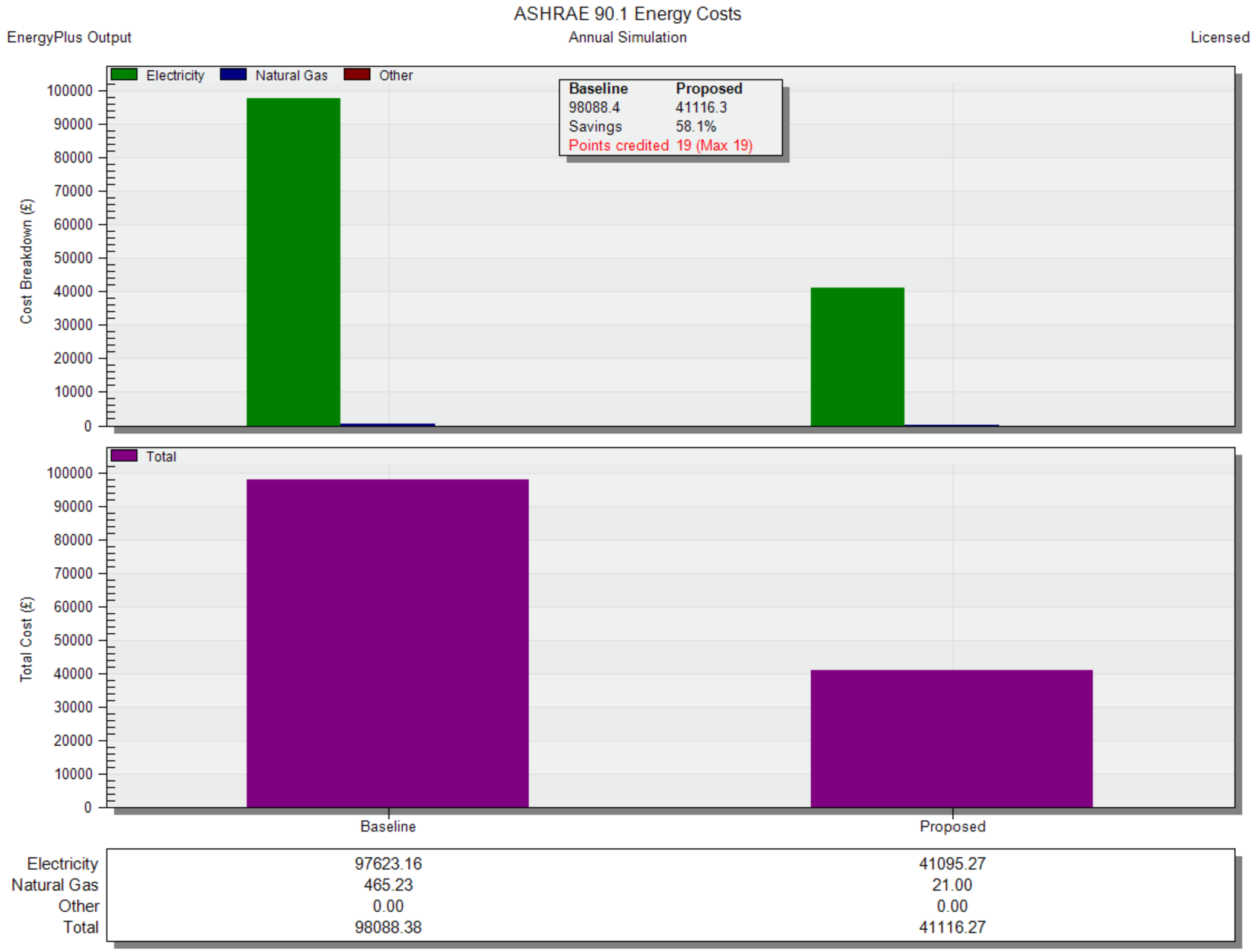
For most LEED BD+C projects, energy modeling is the engine behind the Energy & Atmosphere (EA) category — and EA is where many of the available points live. Two items drive it: the EAp2 prerequisite and the EAc2 credit. Here's how they work and what teams should prepare.
EAp2 — Minimum Energy Performance
EAp2 is a prerequisite: every project must demonstrate a minimum level of energy performance to be certified at all. For the modeled path, that means showing the proposed design beats a code baseline by a required margin. Miss it, and the project can't certify — which is why it's modeled early.
EAc2 — Optimize Energy Performance
EAc2 is the points credit. The further the proposed design outperforms the baseline, the more points it earns — one of the largest single point pools in LEED. This is where good modeling pays off directly: efficient envelope, lighting, HVAC, heat recovery, controls and renewables all translate into measurable improvement and more points.
The method: ASHRAE 90.1 Appendix G
Both items are demonstrated with a whole-building energy model following ASHRAE 90.1 Appendix G — the same baseline-vs-proposed framework used for code compliance. The model compares the proposed design against a standardized baseline and reports the performance improvement that maps to the prerequisite threshold and credit points. (See our explainer on Appendix G baseline vs proposed.) Newer LEED versions broaden the metrics toward carbon — see LEED v5 energy modeling.
What to prepare
- Architectural drawings, areas and orientation
- Envelope assemblies, U-values and glazing (U-factor, SHGC)
- HVAC system types, efficiencies, ventilation and controls
- Lighting power densities and lighting controls
- Occupancy/operating schedules and process loads
- Any on-site renewables, and your target certification level
The earlier these are modeled, the more the team can optimize design choices to maximize points cost-effectively — rather than discovering a shortfall at documentation stage.
Pursuing LEED EA points?
We build LEED EAp2/EAc2 energy models, optimize the design for maximum points, and prepare the documentation reviewers expect. Let's talk about your project.
Get in touchThis article is general guidance. LEED requirements are defined by USGBC and vary by rating system and version — always confirm the current requirements for your project.