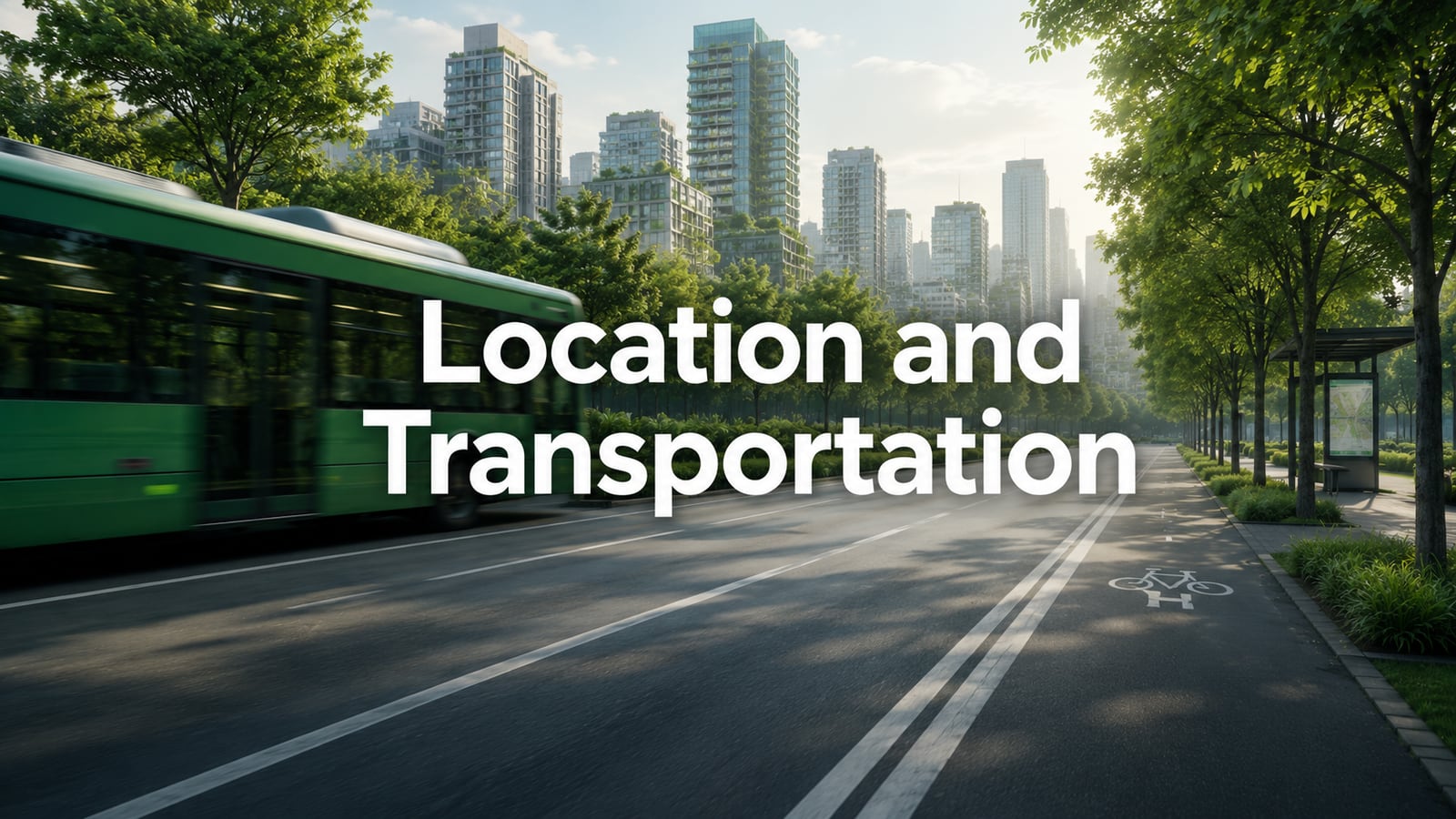
Where you build shapes how people travel — and how people travel is one of the largest sources of a building's lifetime carbon. A high-performing office in a car-dependent location can quietly generate more emissions from commuting than it saves through efficient systems. That is the idea at the heart of LEED v5's Location & Transportation (LT) category, and it is why LT now sits right after the Integrative Process at the front of the rating system. This is part two of our series walking through the categories of LEED v5.
Why location is a carbon decision
LEED has always rewarded good sites, but v5 reframes the category explicitly around transportation decarbonization, quality of life and equitable access. The logic is simple: a connected, walkable, transit-served site lets occupants drive less, while an isolated greenfield site locks in decades of car trips. Location is therefore one of the few decisions that affects emissions long after the building is finished — and one that cannot be retrofitted later.
Fewer, broader credits
One of the biggest structural changes in LEED v5 is consolidation. Many of the older, separate LT credits — surrounding density, diverse land uses, access to transit, bicycle facilities and reduced parking — have been folded into a smaller set of broader credits, so teams pursue a coherent strategy rather than chasing individual points. The headline additions and emphases are:
- Compact & connected development — rewards dense, mixed-use, walkable locations with nearby amenities, quality transit, bike infrastructure and a right-sized parking footprint.
- Electric vehicles — a stronger focus on installing EV charging, or making parking "EV-ready" for future chargers, to support the shift away from combustion vehicles.
- Transportation demand management (TDM) — expanded options such as transit passes, guaranteed ride-home programs and flexible or remote work arrangements that cut single-occupancy car trips.
Protecting land and prioritizing equity
The category also keeps its land and community foundations. Credits continue to reward building on previously developed or LEED for Neighborhood Development locations, protecting sensitive land such as wetlands, farmland and habitat, and — new in v5's stronger equity focus — choosing high-priority and equitable-development sites that direct investment toward communities that need it. The category now asks not just "is this a convenient site?" but "who benefits from where and how we build?"
How LT connects to the rest of LEED v5
Location & Transportation does not stand alone. The transportation emissions a site implies feed directly into the project's carbon picture — the same carbon thinking introduced by the Integrative Process assessments. A site with strong transit and EV readiness lowers occupant travel emissions, which strengthens the project's overall decarbonization story and complements the operational-carbon work done in Energy & Atmosphere.
What it means for project teams
The practical takeaway is to evaluate location and transportation strategy early — ideally during site selection, not after design is underway. Map nearby transit, amenities and walkability; plan EV-ready parking from the outset (it is far cheaper than retrofitting conduit later); and build a transportation demand management plan into the project brief. Teams that treat LT as a first-stage decision usually find these points are inexpensive to earn; teams that leave it late often find the easy options have already been designed out.
Pursuing LEED v5 for your project?
We help teams quantify a project's carbon picture — including the transportation and operational emissions that shape LEED v5 — and turn it into a credit and decarbonization strategy. Let's talk.
Get in touchThis article is general guidance and reflects information available at the time of writing. LEED v5 requirements are defined by USGBC and may be updated — always confirm current requirements in the official rating system for your project.