2026 is a pivotal year for building energy compliance in New York City. A new energy code takes effect, the city's electrification push accelerates, and Local Law 97's carbon limits continue to bite. If you're filing a project in NYC this year, here's what you need to know.
The headline: the 2025 NYC Energy Code starts in 2026
The 2025 NYC Energy Conservation Code (NYCECC) applies to completed job applications filed on or after March 30, 2026. Applications completed on or before March 29, 2026 may continue under the 2020 NYCECC. In practice, that filing date is the line in the sand that decides which rulebook your project follows — so timing matters.
The 2025 NYCECC (and the companion 2025 NYC ASHRAE 90.1 path) is based on the 2025 Energy Conservation Construction Code of New York State and the 2025 NYS energy standard.
What's changing in the new code
The 2025 edition is meaningfully more stringent than the 2020 code — targeting roughly 10–15% additional energy savings depending on building type — and it leans hard into electrification and smarter operation:
- Electrification: the code pushes commercial buildings toward electric systems and advanced, data-driven energy management, closely aligned with Local Law 97's carbon goals.
- HVAC efficiency: higher equipment efficiencies, expanded heat recovery, demand-based ventilation and stricter fan-power limits.
- Lighting & controls: tighter lighting power and more advanced control requirements.
- Envelope: improved building-envelope performance requirements.
- Testing & documentation: functional testing across a broader range of systems, with more detailed documentation and expanded sign-off requirements.
Don't forget Local Law 97
Running in parallel with the energy code, Local Law 97 sets annual carbon-emission limits for most buildings over 25,000 gross square feet. Those limits have applied since 2024 and get significantly stricter in 2030 and beyond, on a path toward net-zero by 2050. Where the energy code governs how you build or renovate, LL97 governs how your building performs in operation — and the two are increasingly designed to reinforce each other.
The wider NYC compliance picture
Large NYC buildings also sit within a family of related local laws worth keeping on your radar:
- Local Law 84 — annual energy & water benchmarking.
- Local Law 87 — periodic energy audits and retro-commissioning.
- Local Law 88 — lighting upgrades and sub-metering.
- Local Law 97 — carbon-emission caps and reporting.
What this means for project teams
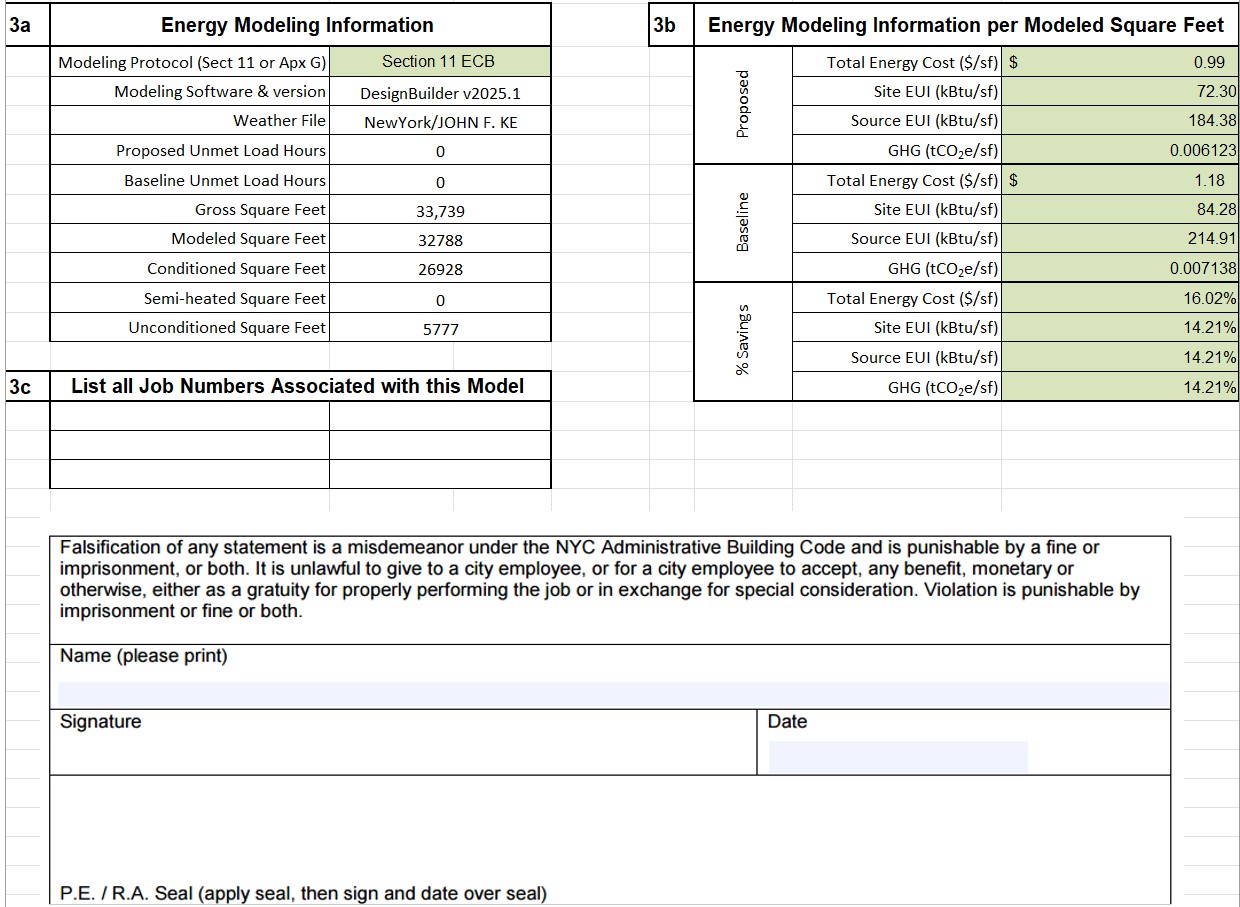
If your NYC project will file around the March 2026 cutover, plan early: confirm which code edition applies, design for electrification and the tighter HVAC/lighting targets, and budget for the expanded testing and documentation. An energy model built up front is the most reliable way to prove compliance, choose cost-effective measures, and avoid surprises at plan review.
Filing a project in New York City?
We handle NYC Energy Code compliance and Local Law 97 modeling end to end — from baseline to submission. Let's talk about your building.
Get in touchThis article is general guidance and reflects information available at the time of writing. Code adoption dates and requirements can change — always confirm current requirements with the NYC Department of Buildings for your specific project.