Thermal bridges are one of the most under-appreciated sources of heat loss in a building — and under UK Part L they can make or break compliance. Get them wrong and you don't just lose energy; you risk cold surfaces, condensation and mould. Here's a plain-English guide to how thermal bridging works and how it's assessed.
What is a thermal bridge?
A thermal bridge ("cold bridge") is a localised part of the building envelope where heat flows more easily than through the surrounding fabric — typically at junctions: wall-to-floor, wall-to-roof, around windows and doors, at corners, balconies and steel lintels. Even with excellent walls and insulation, poorly designed junctions can quietly undermine the whole envelope.
Psi (Ψ) values — heat loss at junctions
A psi value (Ψ) is the linear thermal transmittance of a junction — the extra heat loss per metre of its length, measured in W/m·K. It's like a U-value, but for a line (a junction) rather than an area. Lower is better. Each junction type in a building has its own psi value.
The y-value — thermal bridging in SAP
In SAP (for dwellings), all the junction losses are rolled up into a single y-value — the overall thermal bridging factor:
y-value = Σ (Ψ × Length) ÷ Total envelope area (W/m²K)
Under Part L 2021, relying on the default y-value makes compliance very hard to achieve — it applies a deliberately punitive figure. Calculating real psi values for your junctions almost always gives a much better result and supports a "fabric-first" design.
Why the 2022 change matters
From June 2022, the old Accredited Construction Details (ACDs) were withdrawn from use in SAP — they no longer reflect the performance Part L now demands. In practice that means project teams increasingly need bespoke, calculated psi values for their junctions rather than relying on standard details or defaults.
fRsi — the condensation safeguard
A psi value tells you about heat loss; the surface temperature factor (fRsi) tells you whether a junction will stay warm enough to avoid problems. For dwellings, fRsi should be ≥ 0.75. Fall below it and the inner surface can get cold enough for condensation and mould to form — a health and durability risk, not just an energy one. Good junction design protects both.
How psi values are calculated
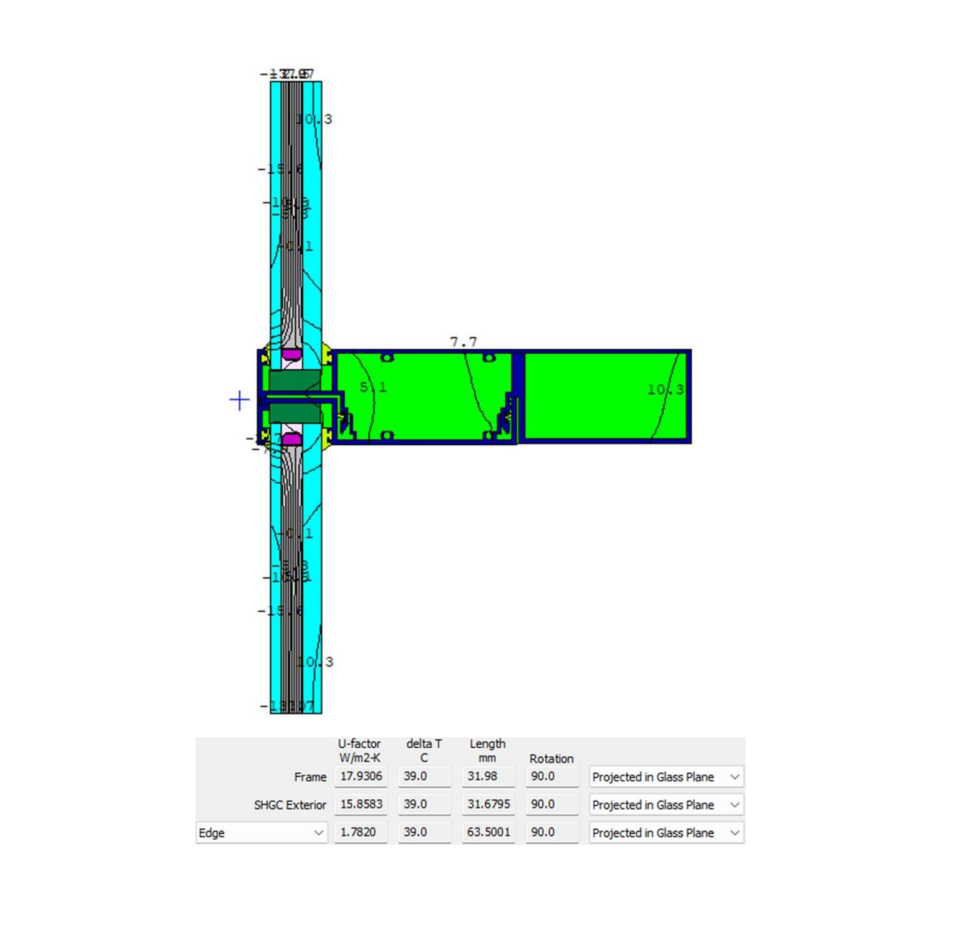
Each junction is modelled in 2D using thermal-modelling software (such as THERM), following BS EN ISO 10211 and the conventions in BR 497. The model produces the psi value and the fRsi for that detail, delivered as a report you can input to SAP/SBEM and submit to Building Control as evidence.
The takeaway
Don't leave thermal bridging to default values. Calculating psi values for your key junctions typically improves your SAP result, demonstrates Part L compliance with real evidence, and designs out condensation risk — a small modelling investment that pays back across energy, compliance and building health.
Need psi-value calculations for your UK project?
We model junctions in THERM to BR 497 / ISO 10211 and deliver psi-value and fRsi reports ready for SAP/SBEM and Building Control. Let's talk.
Get in touchThis article is general guidance and reflects information available at the time of writing. Always confirm current requirements with the relevant Approved Documents and your Building Control body for your specific project.