California's Title 24 is the most demanding energy code in the United States — and for new construction or major alterations in the state, getting it right is non-negotiable. Here's a clear guide to how Title 24 Part 6 works, what changed with the 2025 code, and why most project teams choose the performance path.
What is Title 24 Part 6?
Title 24, Part 6 is California's Building Energy Efficiency Standards, administered by the California Energy Commission (CEC) and updated on a three-year cycle. It sets minimum energy-performance requirements for the envelope, HVAC, lighting, water heating and on-site renewables of residential and nonresidential buildings.
The 2025 code is now in effect
The 2025 Building Energy Efficiency Standards took effect on January 1, 2026. Permit applications submitted on or after that date must comply with the 2025 code using CEC-approved 2025 compliance software; projects permitted earlier follow the 2022 code. Always confirm which cycle applies based on your permit date.
Two ways to comply
- Prescriptive path — a checklist. Each component (wall insulation, window U-factor and SHGC, duct R-value, cool-roof reflectance) must meet or exceed a minimum value set in tables for each climate zone. There's no flexibility to trade one requirement against another.
- Performance path — CEC-approved software models the proposed building against a standard (baseline) design. This allows trade-offs between systems — exceeding requirements in some areas to relax others — which is what makes ambitious or unconventional designs feasible.
CBECC: the compliance engine
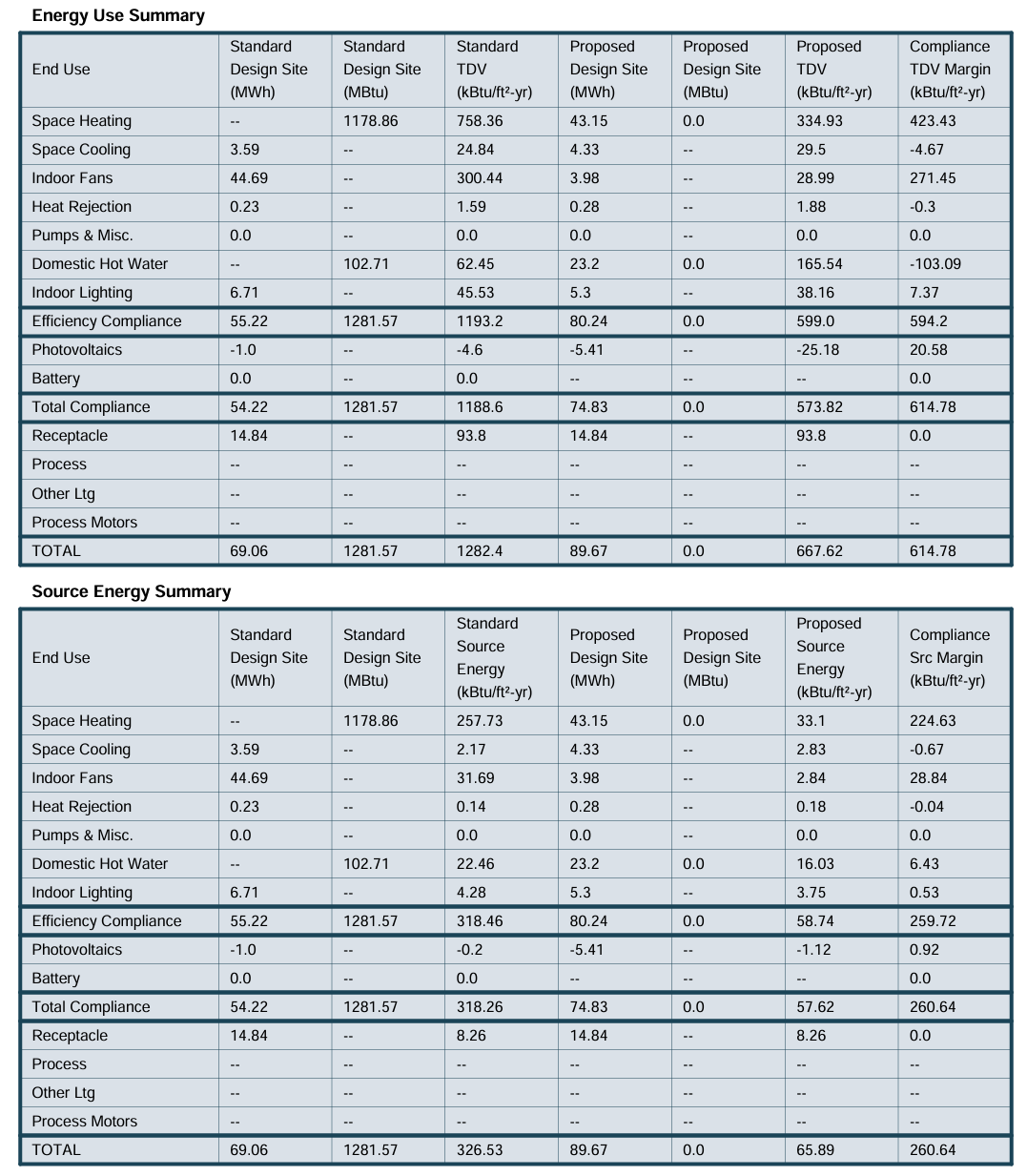
The performance path runs on CEC-approved tools — CBECC-Com for commercial buildings and CBECC-Res for residential — which are the authorized programs for performance compliance under the 2025 code. They evaluate how the envelope, lighting, HVAC and renewables interact against the targets for the building's specific climate zone (California has 16). The output is the compliance documentation submitted for plan review.
Why most teams choose the performance path
The prescriptive path is simple but rigid — one underperforming component can fail the whole project. The performance path, by contrast, lets a strong design element offset a weaker one, often unlocking a more cost-effective route to compliance and accommodating architectural intent. For anything beyond a straightforward box, modeling usually wins.
What this means for project teams
Confirm your code cycle (2022 vs 2025) by permit date, identify the correct climate zone early, and bring an energy model in during design — when envelope, glazing and HVAC decisions can still be optimized. Done early, Title 24 modeling is a design tool, not just a box-tick at permit time.
Need Title 24 compliance for a California project?
We run Title 24 performance modeling in CBECC for residential and nonresidential projects and deliver the compliance documents you need for permit. Let's talk.
Get in touchThis article is general guidance and reflects information available at the time of writing. Title 24 requirements and effective dates change each cycle — always confirm current requirements with the California Energy Commission and your local building department.